Jan 19, 2026
5
Minutes Read
Sales forecasting is a critical process that helps businesses predict future revenue, set achievable targets, and allocate resources effectively. For entrepreneurs, particularly those managing growing businesses, accurate sales forecasting is essential for maintaining operational efficiency and scaling without unnecessary risks. Yet, many companies need help to predict their sales accurately, which can lead to poor planning, misallocated resources, and missed opportunities.
Let’s discuss all about sales forecasting, common challenges businesses face, and how data-driven approaches and CRM systems can enhance forecasting accuracy, ultimately driving business growth.
The Importance of Accurate Sales Forecasting
Accurate sales forecasting gives businesses a clear picture of their future revenue, helping them make informed decisions about resource allocation, hiring, production, and more. Without a reliable forecast, companies may overestimate or underestimate their sales potential, leading to missed growth opportunities, excess inventory, and wasted resources.
For example, if a business overestimates future sales, it might invest too heavily in additional inventory or staffing to find demand lower than expected. This can result in unsold products and higher costs. On the flip side, underestimating sales potential can lead to missed opportunities, as the business may need more stock or resources to meet customer demand, leaving money on the table. Accurate forecasting allows companies to plan more effectively, ensuring they are prepared for growth and downturns.
The Impact of Inaccurate Sales Forecasting
When inaccurate, sales forecasting can have a ripple effect beyond just numbers on a spreadsheet. For employees, consistently missing sales targets or dealing with misaligned resources can lead to frustration and burnout. Sales teams may feel demotivated if their goals are realistic. At the same time, other departments, such as production or customer service, may need help meeting customer demand or handling excess stock.
Additionally, inaccurate forecasting can negatively impact customer satisfaction. For example, suppose a company underestimates demand and cannot fulfill orders. In that case, customers may experience delays or poor service, leading to dissatisfaction and lost trust. On the other hand, if a business overproduces and has too much stock, it may resort to aggressive discounting, which can erode the perceived value of its products and damage its brand reputation.
Accurate forecasting also undermines a company's credibility with stakeholders and investors, as frequent missed targets or resource mismanagement may signal poor leadership or operational inefficiency. Ultimately, reliable sales forecasting is crucial for business growth and maintaining employee morale, customer loyalty, and a positive reputation in the marketplace.
Common Challenges in Sales Forecasting
One of the most common challenges in sales forecasting is dealing with inconsistent or incomplete data. Many businesses need help to track all relevant sales information, leading to unreliable projections. For example, suppose the sales pipeline isn’t fully visible. In that case, decision-makers may not clearly understand how close deals are to closing, making it difficult to forecast future revenue accurately.
Another challenge is relying on gut feelings or assumptions rather than data-driven methods. In many cases, sales teams may overestimate their ability to close deals or fail to account for external factors such as market fluctuations. These inaccuracies can disrupt business planning and lead to either overconfidence or undue caution, harming a company’s bottom line.
Improving Forecasting with Data-Driven Approaches
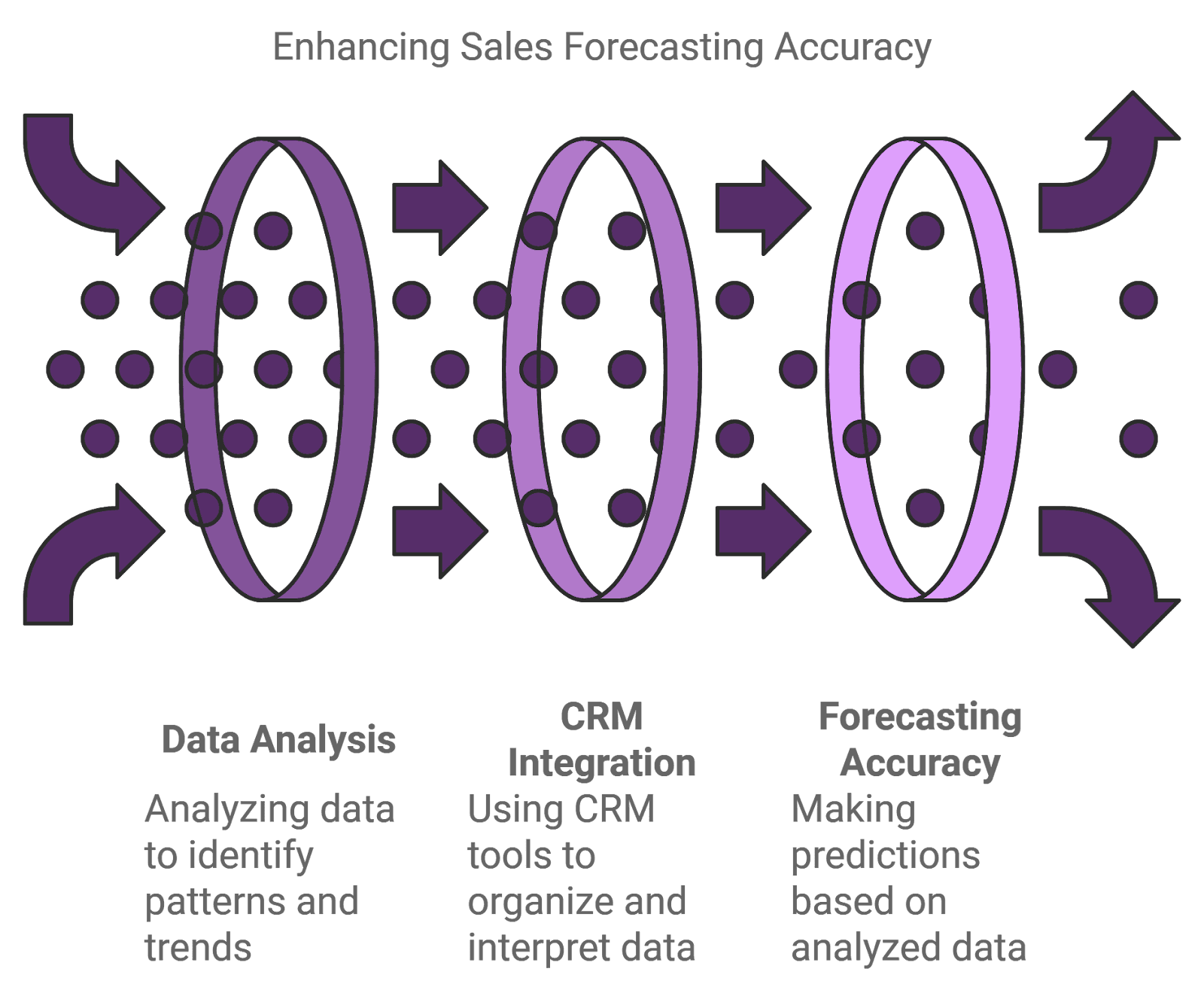
To improve sales forecasting accuracy, businesses must adopt data-driven approaches that leverage historical sales data, current pipeline activity, and market trends. By analyzing this information, companies can better predict how likely specific deals will close and when those sales are expected to come through. For instance, businesses can look at historical data to identify patterns, such as seasonal trends or recurring customer behaviors, which can inform future predictions.
Additionally, real-time data from ongoing sales activities ensures forecasts are based on the most up-to-date information. This allows businesses to adjust their strategies as new data comes in, improving their ability to react to market changes or shifts in customer demand. By focusing on complex data rather than assumptions, businesses can create more reliable forecasts that provide a more straightforward path forward.
How CRM Improves Sales Forecasting
Customer Relationship Management (CRM) systems are vital in improving sales forecasting by providing businesses with real-time data and insights. CRMs track every company interaction with customers, from initial inquiries to final sales, and organize this data into actionable insights. Businesses can use this historical sales data to identify trends and make more accurate predictions about future sales.
For example, a CRM like Saphyte enables businesses to monitor their sales pipeline in real time, ensuring a clear view of how deals progress. This visibility allows companies to accurately forecast revenue based on the likelihood of deals closing and their expected timelines. CRMs also analyze sales trends and customer behavior, helping businesses adjust their strategies as needed to align with market conditions and customer preferences.
CRMs improve forecasting accuracy and enhance long-term sales planning. By providing businesses with detailed analytics and tracking pipeline activities, CRMs help companies predict future sales with greater confidence, reducing the risk of over- or underestimating revenue. This data-driven approach ensures that businesses can allocate resources more effectively, improve decision-making, and ultimately drive business success.
Accurate sales forecasting is essential for businesses aiming to grow and scale efficiently. With reliable forecasts, companies can avoid poor resource allocation, missed growth opportunities, and damage to employee morale and customer satisfaction. By adopting data-driven forecasting methods and leveraging CRM tools like Saphyte, businesses can significantly improve their forecasting accuracy, allowing them to navigate challenges, meet targets, and seize new growth opportunities.