
Feb 16, 2026
5
Minutes Read
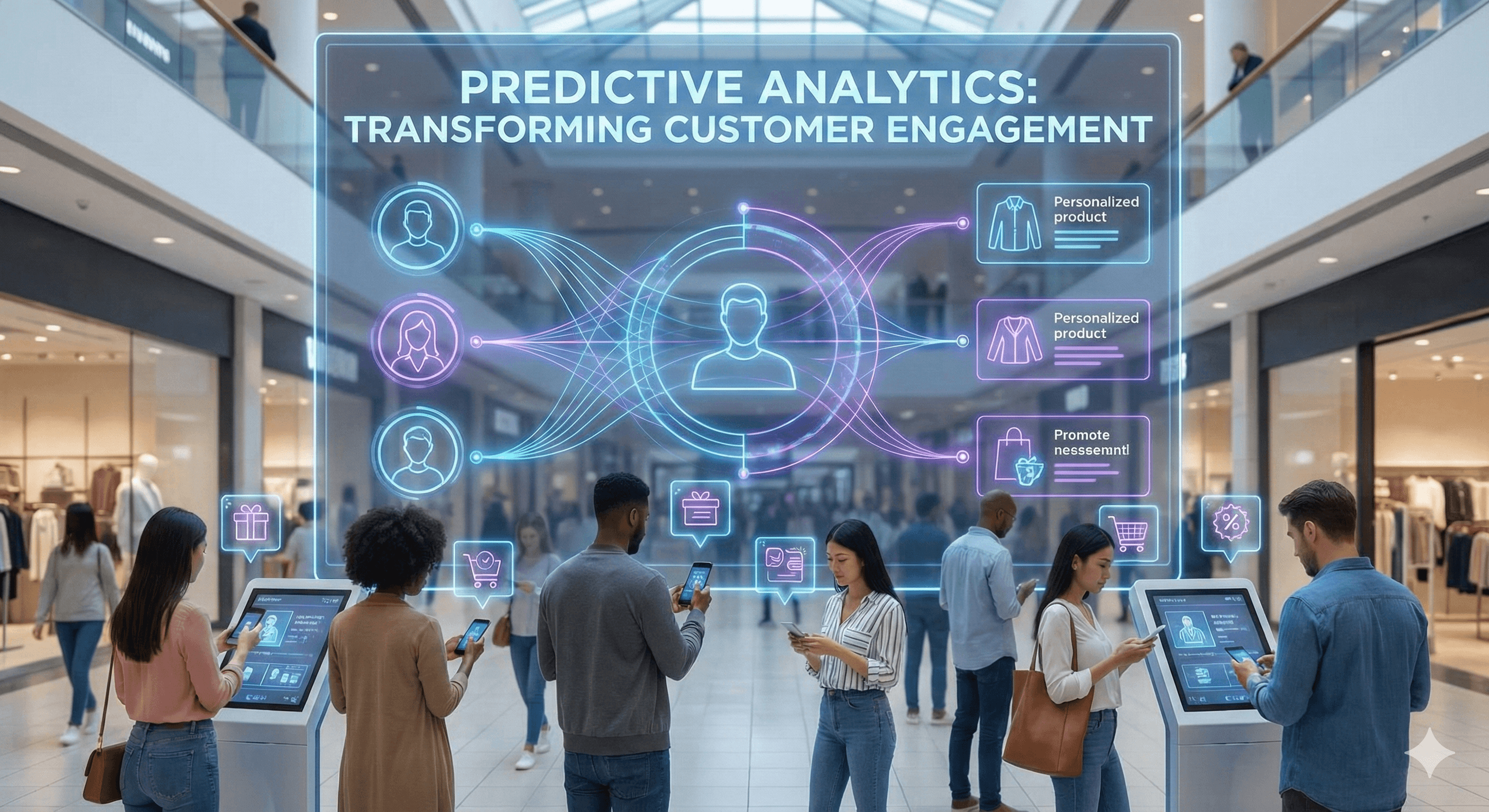
Understanding customer behavior and anticipating their needs can feel like trying to predict the weather without a forecast. For entrepreneurs, this challenge often leads to missed opportunities and disengaged customers. But what if you could tap into your data to see what your customers are likely to do next? Predictive analytics makes this possible, transforming raw data into actionable insights that drive customer engagement.
Predictive analytics uses historical and current data to forecast future customer behavior. By analyzing patterns, businesses can better understand their audience, anticipate their needs, and tailor their strategies to enhance the customer experience. With predictive analytics integrated into tools like CRMs, companies can take a proactive approach to engagement, creating meaningful connections that build loyalty and drive growth.
What Is Predictive Analytics, and Why It Matters for Engagement
Predictive analytics leverages advanced algorithms and machine learning to analyze customer data and identify patterns. These patterns reveal valuable insights, such as which customers are likely to churn, what products they might buy next, or when they’re most likely to engage. For businesses, this means moving from reactive to proactive strategies, addressing customer needs before they’re even voiced.
Take Netflix as an example. Its recommendation engine uses predictive analytics to suggest movies and shows based on viewers' past interactions. This personalized experience keeps users engaged, leading to higher customer satisfaction and retention rates. Netflix’s success demonstrates how predictive analytics isn’t just a buzzword—it’s a critical tool for staying relevant in today’s competitive market.
The importance of predictive analytics lies in its ability to enhance decision-making. Instead of relying on guesswork, businesses can make data-backed decisions that align with customer preferences and behaviors. This precision not only saves time but also ensures resources are allocated effectively, maximizing the impact of marketing and engagement efforts.
Key Benefits of Leveraging Predictive Analytics in Customer Relations
One of the biggest advantages of predictive analytics is improved customer retention. By identifying patterns that indicate churn, businesses can take preemptive action to retain customers. For example, predictive models might flag a drop in engagement or a change in purchasing frequency. Armed with this insight, businesses can offer targeted incentives, such as discounts or loyalty rewards, to re-engage at-risk customers.
Another benefit is the ability to optimize marketing efforts. Starbucks, for instance, uses predictive analytics to send personalized offers to its customers based on their buying habits and preferences. These tailored campaigns not only boost sales but also strengthen customer relationships by making each interaction feel personal. This kind of precision marketing is only possible with predictive analytics, which ensures that every message resonates with its audience.
How Predictive Analytics Helps Businesses Personalize Experiences
Today’s customers expect more than generic marketing—they want personalized experiences that feel uniquely tailored to them. Predictive analytics enables this by analyzing data to understand individual preferences, purchase history, and browsing behavior. With this information, businesses can craft personalized recommendations, offers, and content that align with each customer’s needs.
Amazon is a prime example of personalization through predictive analytics. Its recommendation engine analyzes user activity, from browsing patterns to past purchases, to suggest products that customers are likely to buy. This approach not only enhances the shopping experience but also drives repeat purchases, contributing to Amazon’s position as an e-commerce leader.
Beyond recommendations, predictive analytics can enhance customer interactions at every touchpoint. For instance, banks can use it to predict when customers might need a loan based on their financial history and proactively offer personalized solutions. This level of engagement fosters trust and positions the business as a reliable partner in meeting customer needs.
Real-World Examples of Businesses Excelling with Predictive Insights
Predictive analytics has transformed how businesses across industries engage with their customers. Spotify, for example, uses predictive insights to create personalized playlists like "Discover Weekly." By analyzing listening habits, Spotify curates songs that match users' tastes, keeping them engaged and loyal to the platform. This initiative alone has been credited with increasing user retention and solidifying Spotify’s competitive edge in the streaming market.
Retail giant Target also exemplifies the power of predictive analytics. By analyzing purchasing patterns, Target can predict life events, such as pregnancy, and send personalized offers for related products. While this approach initially sparked controversy, it ultimately highlighted how predictive insights can lead to timely, relevant engagement that drives sales and deepens customer relationships.
How CRM Systems Integrate Predictive Analytics for Proactive Engagement
CRMs are the backbone of predictive analytics in customer engagement. By consolidating customer data into a single platform, CRMs enable businesses to analyze historical interactions and predict future behavior. Saphyte, for instance, integrates predictive analytics to help businesses identify trends and opportunities for personalized engagement.
With Saphyte, businesses can track key metrics such as purchasing frequency and customer preferences. For example, if the system identifies a customer who hasn’t made a purchase in six months, it can trigger an automated re-engagement email with tailored product recommendations. This proactive approach not only prevents churn but also fosters loyalty by showing customers that their needs are understood and prioritized.
Moreover, CRMs simplify the execution of predictive campaigns by automating workflows. From sending timely follow-ups to scheduling targeted promotions, CRMs like Saphyte ensure that every engagement is both relevant and timely. This efficiency allows businesses to scale their efforts without compromising on personalization, making predictive analytics accessible to companies of all sizes.
Predictive analytics isn’t just a tool—it’s a game-changer for customer engagement. By harnessing the power of data, businesses can anticipate needs, deliver personalized experiences, and build lasting relationships. With the help of CRMs, integrating predictive analytics into your strategy becomes a seamless process, enabling you to stay ahead of the curve and connect with customers in meaningful ways.