Jan 9, 2026
5
Minutes Read
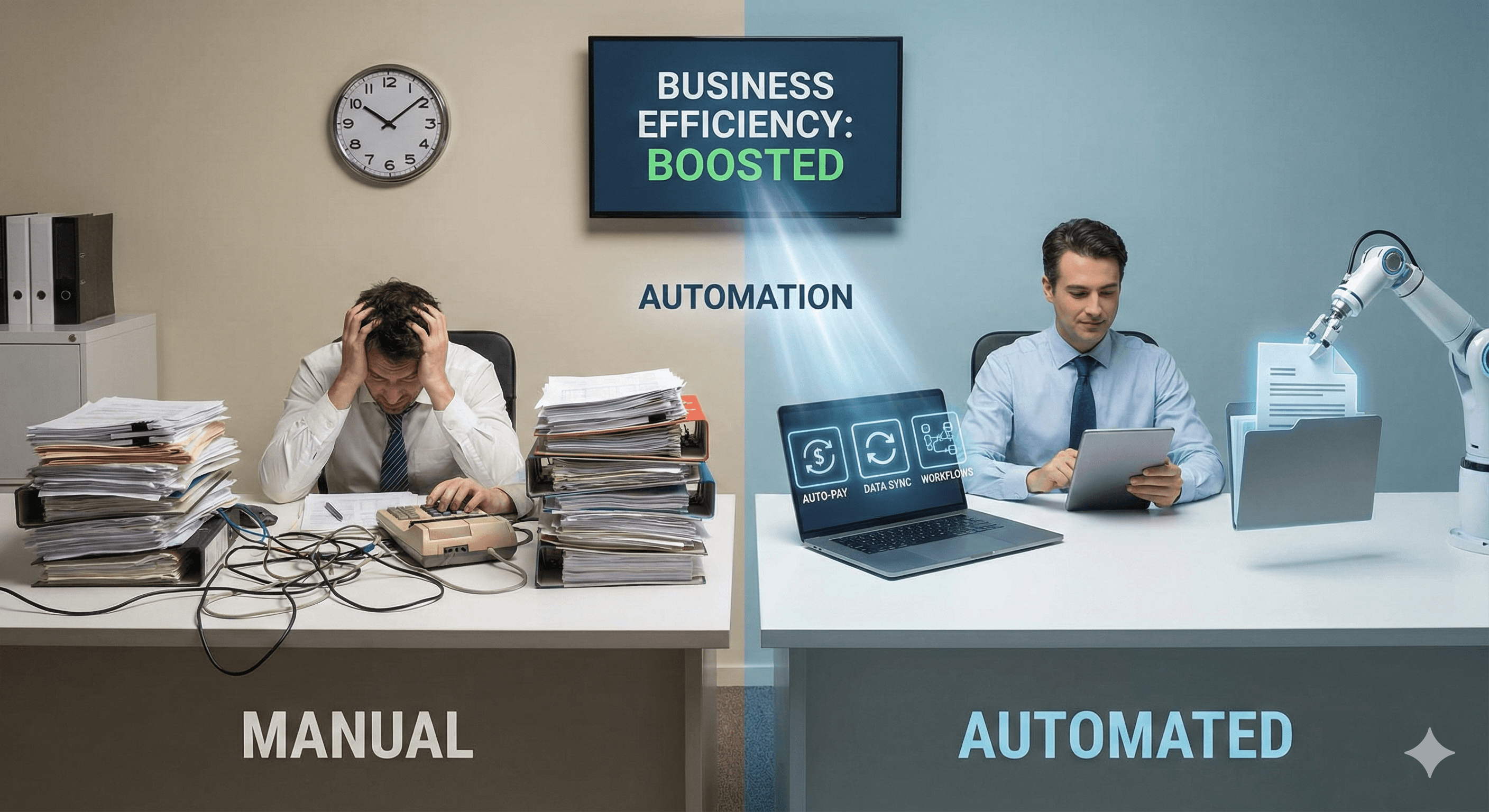
Managing time-consuming manual tasks can be a significant challenge for businesses. Entrepreneurs often find that repetitive tasks slow operations, prevent teams from focusing on high-priority activities, and ultimately affect overall business performance. In today’s fast-paced market, automation solves these problems by streamlining workflows and allowing teams to focus on tasks that drive growth.
This article will explore how automating manual tasks can improve team efficiency, save valuable time, and enhance business performance.
The Impact of Manual Tasks on Business Efficiency
Manual tasks, such as data entry, reporting, and sending follow-up emails, require considerable time and resources. Employees who spend less time on these repetitive tasks have less time for strategic activities that can move the business forward. This can lead to operational inefficiencies, missed deadlines, and an inability to meet customer expectations.
For example, a study by McKinsey found that in many industries, employees spend up to 60% of their time on routine tasks that could easily be automated. This slows down decision-making and affects productivity. When manual tasks take over, teams may become overwhelmed, leading to errors, frustration, and burnout.
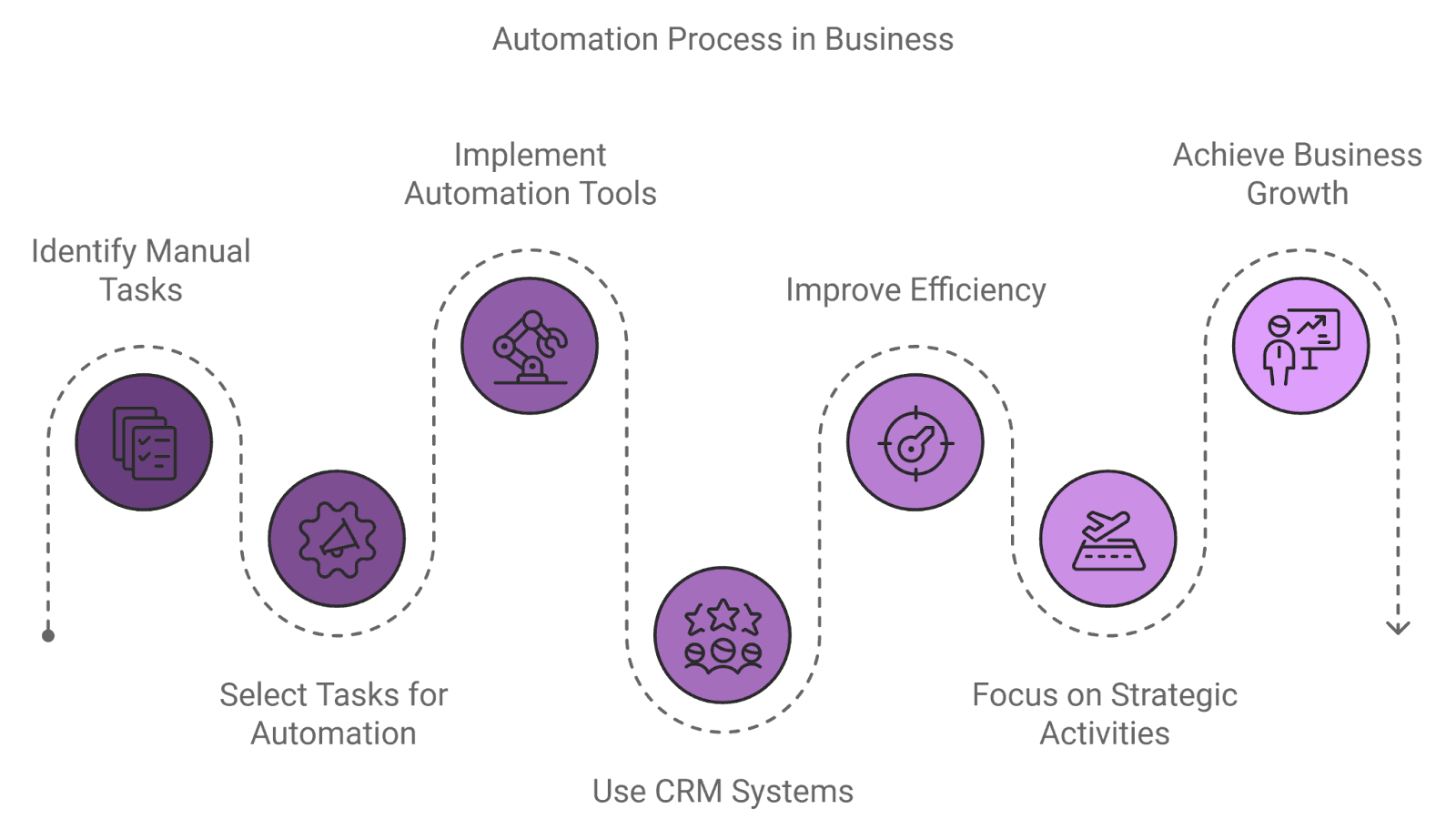
Identifying Tasks for Automation
Not every task can or should be automated. However, there are specific repetitive tasks that are ideal candidates for automation. Key areas to consider for automation include data entry, invoicing, scheduling, reporting, and follow-ups. These tasks often involve predictable steps that can be streamlined with the right tools.
For instance, manual data entry can be prone to errors, especially when dealing with large volumes of information. Automating data entry ensures that information is processed quickly and accurately. Similarly, automated reporting allows businesses to generate real-time insights without spending hours compiling data manually.
When selecting automation tasks, businesses should focus on those that consume the most time and resources but contribute little to growth. This allows teams to refocus on high-impact activities.
The Benefits of Automation
Automating repetitive tasks offers a range of benefits that go beyond simply saving time. One of the main advantages is that it allows employees to focus on tasks that truly matter, such as building client relationships or innovating products and services. With automation, businesses can significantly reduce human errors, as automated systems follow predefined steps without deviation.
Another key benefit is improved team morale. When employees are freed from mundane tasks, they can engage in more meaningful work, leading to higher job satisfaction and a more motivated workforce. Additionally, automation enables faster decision-making by providing real-time data and insights, allowing businesses to adapt quickly to changing circumstances.
CRM for Task Automation
Customer Relationship Management (CRM) systems are crucial in automating repetitive tasks and boosting efficiency. A CRM system allows businesses to automate tasks like data entry, customer follow-ups, and task management. This saves time and ensures that tasks are completed accurately and on time.
For example, with a CRM like Saphyte, businesses can set up automated workflows to handle customer interactions, assign tasks, and send follow-up reminders. This helps teams stay organized and ensures every opportunity is noticed. By centralizing customer data and automating routine tasks, CRMs allow teams to focus on high-value activities like strategy development and customer relationship building.
CRM systems also provide real-time visibility into task progress, making it easier for managers to track team performance and adjust workflows as needed. Automating these essential processes allows businesses to streamline their operations, reduce delays, and improve overall productivity.
Automating manual tasks is critical for businesses looking to enhance efficiency and improve performance. By identifying tasks like data entry, reporting, and follow-ups for automation, companies can free up valuable time for strategic initiatives. This shift allows teams to focus on activities that drive growth and innovation.
CRM systems, like Saphyte, are powerful tools for automating tasks and optimizing team performance. By centralizing data and automating repetitive processes, CRMs help businesses stay organized, meet deadlines, and boost operational efficiency. For companies seeking to scale and improve their operations, investing in task automation through CRM systems is a crucial strategy for long-term success.