
Dec 11, 2025
6
Minutes Read
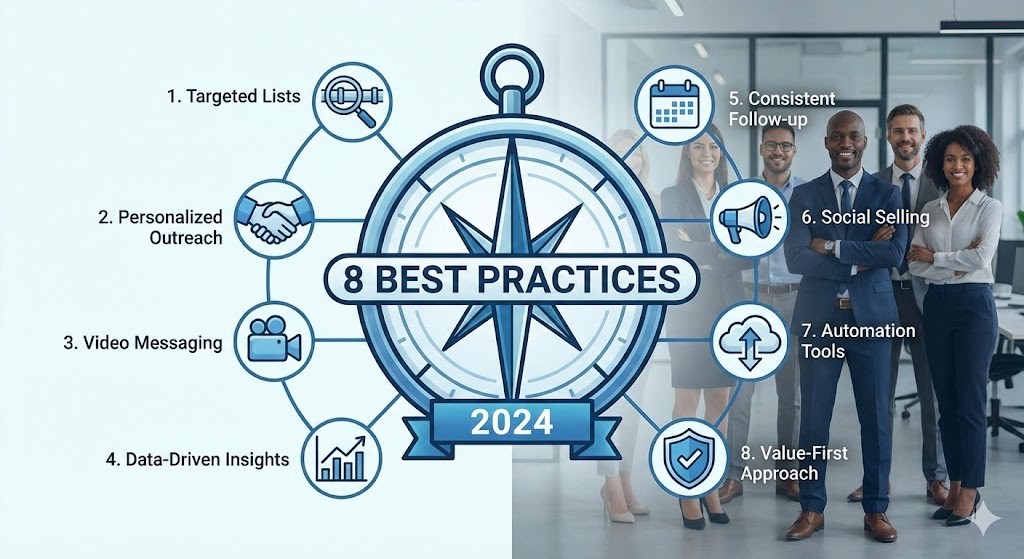
Sales prospecting is the cornerstone of business growth, especially in a competitive marketplace. Identifying and nurturing leads is essential to building a strong sales pipeline and consistently delivering conversions.
As we move through 2026, sales prospecting strategies are evolving to incorporate more advanced technology, data-driven insights, and personalized outreach.
Using these tools and practices, businesses can stay ahead of the competition and maintain sustainable growth. This article outlines eight best practices for sales prospecting in 2026, focusing on real-world examples of how businesses have successfully implemented these strategies.
How Sales Prospecting Can Help Businesses Grow
Sales prospecting is finding potential customers, qualifying them, and engaging them to convert them into paying clients. It is crucial for building a consistent pipeline of leads that will ultimately drive revenue. A recent LinkedIn State of Sales report found that top-performing sales teams spend 33% more time prospecting than underperforming teams. This extra effort is rewarded with more qualified leads, resulting in more sales and faster growth.
Moreover, prospecting helps businesses maintain a healthy sales pipeline, which is critical for sustainable growth. With a steady flow of new leads, sales teams can experience revenue growth. Companies can use their solid prospecting efforts to consistently grow the customer base, even in highly competitive markets. Then, companies must build a pipeline that ensures steady conversions and long-term growth by identifying and engaging with companies that align with their product offerings.
8 Sales Prospecting Best Practices in 2026
Here are the best practices to consider for next year:
1. Using Data for Targeting
In 2026, data-driven prospecting is essential for businesses that want to stay competitive. By analyzing customer data such as purchasing behavior, engagement history, and demographic details, sales teams can narrow their focus to the leads most likely to convert.
Spotify uses its platform's behavioral data to identify users likely to upgrade to premium plans. By analyzing listening habits and engagement levels, Spotify’s sales team targets high-value prospects with personalized offers, leading to improved conversion rates.
2. Use Multiple Channels
More than just one outreach method is required. A multi-channel approach—combining email, social media, and phone calls—ensures broader reach and engagement. Companies can use a multi-channel approach by using targeted ads, email marketing, and direct outreach to connect with potential hosts, expanding their inventory of properties across the globe.
Implement a CRM like Saphyte to manage outreach across different channels and ensure consistent messaging. Saphyte helps sales teams organize contact lists, track interactions, and automate follow-ups, making it easier for prospects to reach out to platforms.
3. Personalize
Personalization has become a must in sales prospecting. Tailoring your message to the prospect’s needs and pain points increases engagement. Companies can customize their outreach emails based on the recipient’s industry and specific use case. This approach improves response rates and builds stronger relationships with prospects.
4. Qualify Leads Early
Only some leads are worth pursuing, so early lead qualification is critical. Companies can use lead scoring to rank prospects based on engagement levels and the likelihood of conversion. This helps their sales team prioritize high-value leads and save time on less promising opportunities.
Saphyte’s lead-scoring feature can help automate the lead qualification process. By tracking engagement levels and customer behaviors, Saphyte assigns a score to each lead, ensuring that your team focuses on the most promising prospects.
5. Use CRM Systems to Automate Prospecting
CRM tools like Saphyte are designed to streamline prospecting efforts. Saphyte enables sales teams to focus on relationship building rather than administrative work by automating tasks such as follow-ups, data entry, and lead scoring. Automation not only saves time but also ensures that no lead is neglected.
Using a CRM system to automate its prospecting process reduces manual data entry. It improves follow-up efficiency, allowing companies to scale their sales efforts while maintaining a personal touch with prospects.
6. Create a Consistent Follow-Up Strategy
Consistency is key when following up with prospects. Many leads won’t respond to the first contact, but regular follow-ups can make the difference. A structured follow-up strategy that includes multiple touchpoints, such as emails and phone calls, over a defined period ensures no lead is left unattended, boosting conversion rates.
Best practice: Use Saphyte’s automation features to schedule follow-ups and set reminders for your sales team, ensuring every prospect receives timely and consistent communication.
7. Optimize Your Timing
Timing is critical when reaching out to prospects. Studies show that the best times to reach decision-makers are mid-week and during the morning hours. LinkedIn data suggests that sales emails on Tuesdays and Wednesdays receive higher response rates. By optimizing the timing of your outreach, you increase the likelihood of engagement.
ZoonInfo uses data to identify the best times to reach prospects based on their online behaviors and activity patterns, leading to more effective outreach and higher engagement.
8. Track and Measure Results
Tracking your prospecting efforts is essential for continuous improvement. CRM systems like Saphyte allow you to measure key metrics such as email open rates, call success rates, and lead conversion rates. By analyzing this data, you can refine your approach and focus on strategies that yield the best results.
Companies can track every stage of their prospecting efforts using a CRM system, allowing them to see which strategies drive results. This data-driven approach enables their sales team to make informed adjustments and improve their prospecting success.
Tips to Getting Started with Sales Prospecting
To begin sales prospecting effectively, it’s essential to have a clear understanding of your target audience. Start by creating detailed buyer personas that outline your ideal customers' demographics, pain points, and buying behaviors. Companies use buyer personas to guide their prospecting efforts, ensuring their sales teams focus on leads most likely to convert.
Once your target audience is defined, use a CRM like Saphyte to organize and manage your prospecting efforts. Saphyte helps track interactions, manage lead data, and automate follow-ups, making it easier for sales teams to stay organized and focus on high-value prospects. Using Saphyte’s lead scoring feature, you can prioritize the most promising leads and ensure your team engages with the right prospects at the right time.
Use Saphyte’s built-in analytics to track your prospecting efforts and measure the success of different outreach strategies. This will help you identify the most effective methods and refine your approach.
Sales prospecting remains one of the most essential strategies for business growth in 2026. Businesses can optimize their prospecting efforts and improve lead conversion rates by following best practices like leveraging data, personalizing outreach, using CRM systems for automation, and maintaining consistent follow-ups. To get started on the path to more effective prospecting, consider using a CRM like Saphyte to streamline your process, track results, and ensure your outreach is as targeted and efficient as possible.