
Dec 26, 2025
5
Minutes Read
Teams often need help with manual, repetitive tasks that waste valuable time and drain productivity. Entrepreneurs need to work on keeping their teams focused on what matters, while repetitive tasks like data entry, follow-ups, and managing schedules bog them down.
Customer Relationship Management (CRM) systems offer a solution by automating these repetitive tasks, freeing time for teams to focus on higher-priority work.
How does CRM automation enhance team productivity, empowering teams to work smarter, not harder.
The Hidden Costs of Manual Tasks on Team Performance
Manual tasks like data entry and follow-up emails may seem minor. Still, they can add up to significant time for the business. When teams spend hours on repetitive tasks, it leaves less time for strategic, high-impact work that drives business growth.
Additionally, manual processes are more prone to human error, leading to missed opportunities, miscommunication, and costly mistakes. These inefficiencies can affect team morale, as employees feel their skills are underutilized and work on low-value tasks instead of contributing to the bigger picture.
A significant portion of the workday is lost to manual processes that do not add meaningful value to the company’s goals. For example, without automation, sales teams may spend hours manually entering customer data and logging communications each week. These tasks waste time and open the door to errors that can disrupt the sales process and affect customer relationships.
CRM Automation: Delegating Repetitive Tasks
One of CRM systems' most significant advantages is their ability to automate repetitive tasks, allowing teams to focus on work that requires human attention. Tasks like data entry, follow-up emails, scheduling appointments, and updating records can be handled automatically through CRM to remove the excess burden from team members. This automation leads to faster response times, better organization, and higher business productivity.
Suppose a customer shows interest in a product or fills out a form. In that case, the CRM automatically sends a personalized email without requiring manual input from the sales team. This process ensures that all leads are tapped into, allowing the sales team to focus on more strategic activities like closing deals. By delegating these repetitive tasks to the CRM, teams can optimize their workflow and spend more time on high-value tasks.
A financial firm, for example, can use CRM automation to streamline client communication. Automating data entry and follow-up tasks can reduce the firm's administrative workload and give it more time to engage with high-value clients.
Empowering Teams to Focus on High-Priority Work
Instead of spending hours managing data or scheduling follow-ups, teams can dedicate their time to tasks that require creativity, problem-solving, and critical thinking—areas where human input is irreplaceable. This shift in focus boosts morale and increases job satisfaction, as employees feel they are making a more significant impact.
Take, for example, marketing teams with tasks like email segmentation and campaign scheduling. Automating these tasks can give time to marketing professionals to focus on crafting better strategies, developing creative content, and analyzing customer behavior. A study by McKinsey showed that businesses that adopted automation tools saw a 0.5 to 3.4 percentage point increase in productivity. By removing repetitive tasks, CRMs allow teams to spend time on what matters—functions that move the business forward.
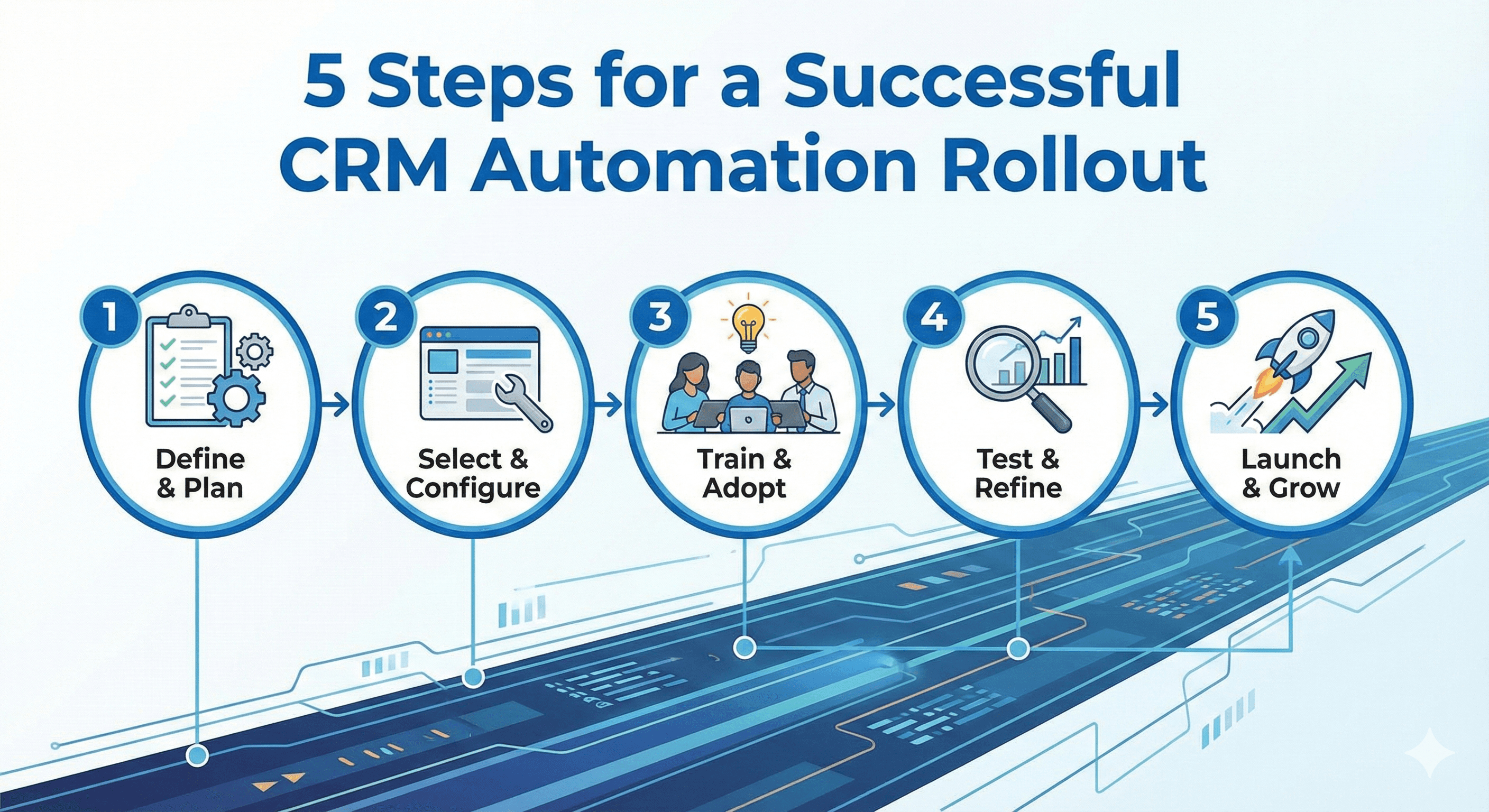
5 Steps for a Successful CRM Automation Rollout
Rolling out CRM automation doesn’t happen overnight. It requires a thoughtful, step-by-step process to ensure the system works smoothly for your team and provides real value. Here are five essential steps for a successful CRM automation rollout:
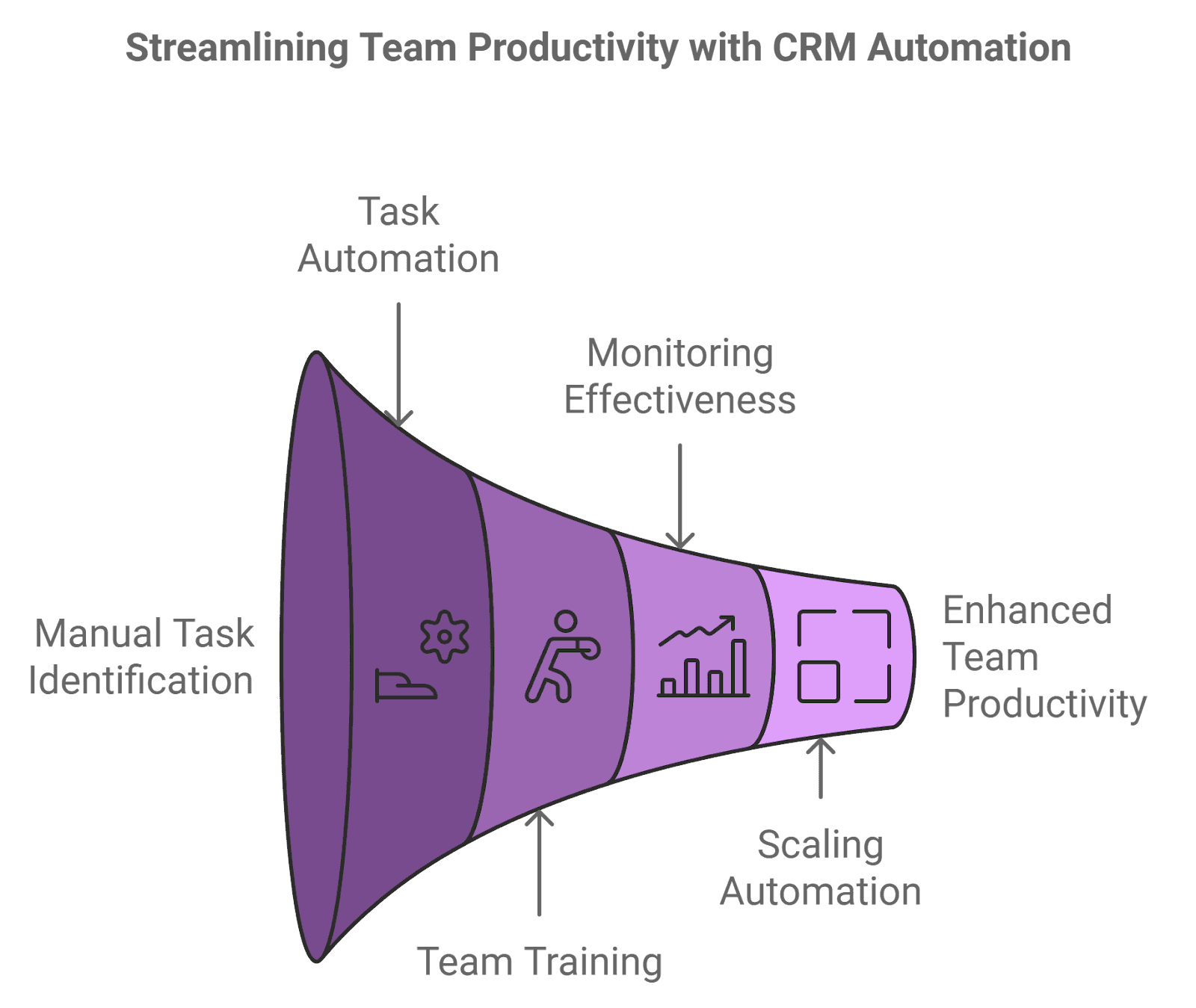
1. Identify critical areas for automation: Start by assessing which repetitive tasks take the most time and energy. This could include data entry, follow-ups, or scheduling. Focus on the tasks that have the most significant impact on productivity.
2. Choose the right CRM system: Not all CRM systems are built the same, so choose one that fits your business needs. Systems like Saphyte offer customizable automation tools that adapt to your workflow, making the transition seamless.
3. Train your team: Before rolling out the CRM, ensure your team is adequately trained to use the system. This involves not just technical training but also an understanding of how automation will enhance their workflow and reduce their workload.
4. Monitor and adjust: Once the CRM automation is in place, monitor its effectiveness. Are tasks being completed more efficiently? Is the team saving time? Use these insights to adjust the automation settings to ensure they are providing maximum value.
5. Scale automation over time: Start small, focusing on a few key areas, then gradually expand automation to other parts of the business. As your team becomes more comfortable with the system, you can scale up automation to cover more tasks and improve efficiency.
These steps ensure that CRM automation is implemented effectively, empowering teams to work more efficiently and strategically.
CRM systems are powerful tools that help businesses automate repetitive tasks, freeing up teams to focus on high-priority work. By eliminating manual processes like data entry and follow-ups, teams can improve their productivity and contribute more meaningfully to business goals. Implementing CRM automation takes careful planning, but following the steps outlined, businesses can roll out automation smoothly and see immediate benefits in team performance. With CRM systems like Saphyte, teams can work smarter, not more complex, and boost productivity.